Jaw exercises for snoring: 8 free drills that unlock the airway team
Jaw exercises for snoring are not a magic click-cure. They help when the jaw drops open, clenches tight, or fights an oral appliance, and they work best beside tongue and soft palate training. This guide covers 8 practical drills, dental sleep and ENT demonstration context, trial-backed expectations, and clear stop rules for TMJ pain.


Quick answer
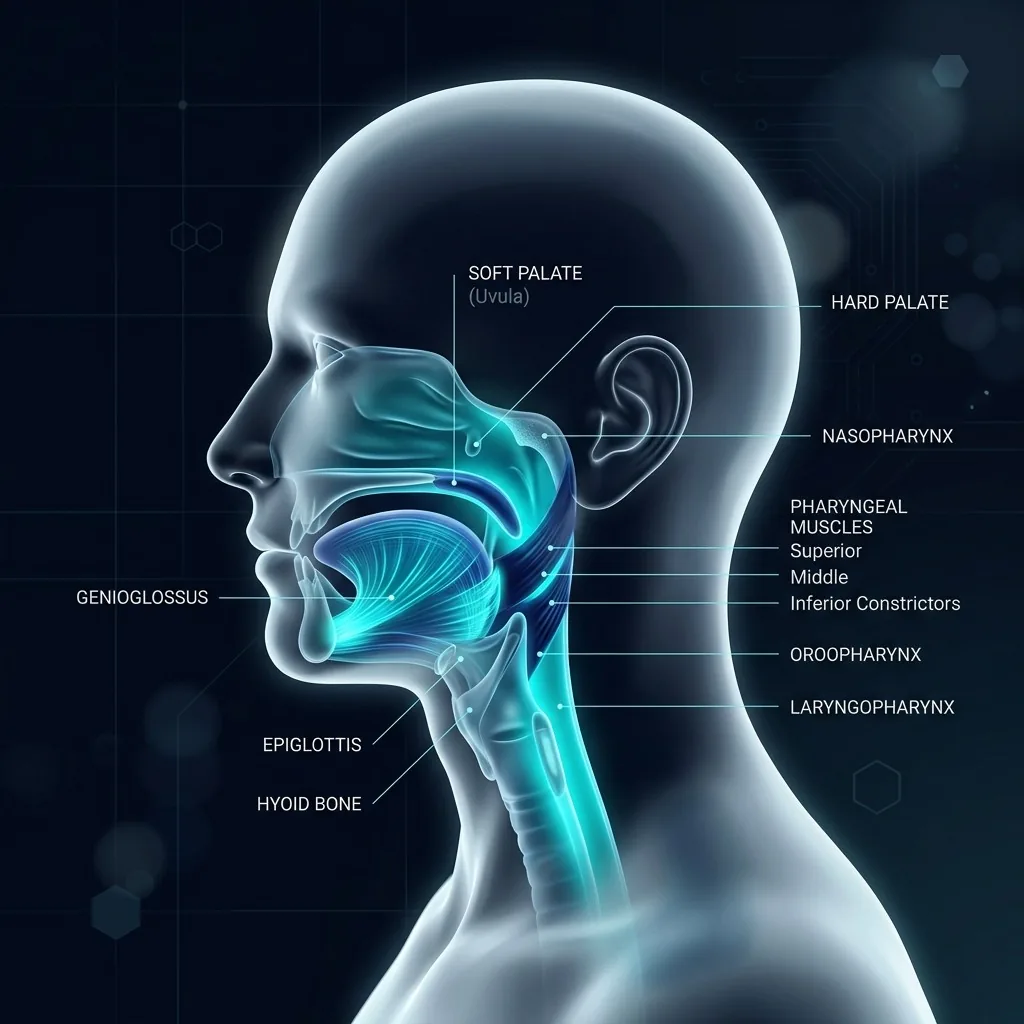
Jaw exercises for snoring improve how the lower jaw moves, rests, and cooperates with the tongue and lips. They are most useful for open-mouth snoring patterns, clenching-related tightness, and jaw soreness from a mandibular advancement mouthpiece. They are not the same thing as wearing a device that holds the jaw forward all night.
The best published evidence is for multi-structure oropharyngeal / myofunctional programs (tongue + palate + facial/jaw elements), practiced most days for weeks. If you have signs of sleep apnea, get evaluated. Exercises support care; they do not replace it.
Jaw exercises vs a snoring mouthpiece
People search "jaw exercises for snoring" for two different jobs. One is training: mobility, unclenching, lip seal, and tongue-jaw coordination so the airway team works better. The other is mechanical advancement: a MAD that holds the mandible forward so the tongue base has more space.
Exercises do
Reduce stiffness, teach controlled opening, support appliance recovery, and pair with tongue posture so the mouth is less likely to dump open.
A MAD does
Hold forward posture overnight. It can reduce snoring and mild-to-moderate OSA in selected adults, with trade-offs (saliva, bite change, jaw discomfort) that dental sleep teams manage.
If you already use a mouthpiece, the American Academy of Dental Sleep Medicine patient education set is a useful model: moist heat, gentle massage, stretch open/close with tongue on the palate, then light two-finger isometrics for open, protrude, and side glide. That is recovery and control, not a license to force through joint pain. For device evidence more broadly, see do anti-snoring mouthpieces work.
Who should prioritize jaw exercises
You do not need a sleep endoscopy to start a careful routine. These signals help you decide whether jaw work should lead, support, or wait.
Lead with jaw work when
- You wear a MAD / snoring mouthpiece and wake with jaw stiffness or temporary bite change.
- Partners say your jaw drops open and the snore starts after mouth opening.
- You clench or grind, and the jaw feels tight by evening.
- Tongue drills feel blocked because the jaw is locked or the neck is forward.
Pair jaw with tongue/palate when
- Snoring is throaty even with lips closed (tongue base + palate still matter).
- You mouth-breathe by day and need lip seal + nasal habit, not jaw strength alone.
- You want the trial-backed multi-structure pattern (tongue + palate + facial/jaw).
See a clinician first when
- Jaw locks, clicks with sharp pain, or will not open fully.
- You have witnessed apneas, gasping, severe sleepiness, or resistant high blood pressure.
- A custom oral appliance was prescribed: follow the dental sleep team plan.
- Recent jaw surgery, active TMJ flare, or unexplained facial swelling.
8 jaw exercises for snoring
Start gently. These should feel like controlled drills, not a max-effort jaw gym session. The first pair locks tongue posture to jaw motion. The next set covers dental sleep-style isometrics. The last drills add posture, lip seal, and gentle floor-of-mouth work. Pair with tongue exercises, soft palate exercises, and throat exercises for a complete airway circuit.
Exercise 1
Tongue-on-spot jaw open/close
Tongue rest posture + controlled jaw motion
- Rest the tongue tip on the "spot" behind the upper front teeth, with the rest of the tongue lightly on the palate.
- Keep lips relaxed. Slowly open and close the jaw while the tongue stays on the spot.
- Do not let the tongue drop as the mouth opens. Build to 10 clean reps twice daily.
Form cue: Classic myofunctional pairing (Audrey Yoon-style education demos): the jaw moves, the tongue keeps its roof-of-mouth job. If the tongue peels off every rep, shorten the opening range first.
Exercise 2
Tongue slide with quiet jaw
Palatal contact without clenching
- Place the tongue tip behind the upper front teeth.
- Slide the tongue backward along the palate toward the soft palate, then return.
- Keep the jaw quiet. Teeth slightly apart, lips soft, no grinding.
Form cue: A high-frequency drill across snoring guides. The jaw lesson is negative: stop using masseter force to "help" the tongue.
Exercise 3
Resisted jaw opening (light)
Jaw depressors under gentle load
- Sit tall. Place a fist or two fingers under the chin for light resistance only.
- Open the mouth slowly against that light pressure, then close without slamming.
- Stay inside a comfortable range. Stop if you feel sharp joint pain or locking.
Form cue: Matches dental sleep education for oral-appliance recovery (AADSM patient video): stretch and light isometrics, not max-effort gym reps.
Exercise 4
Resisted protrusion and side glide
Forward and lateral jaw control
- Protrusion: two fingers on the center of the chin; gently push the lower jaw forward against light resistance, then return.
- Side glide: two fingers on the right of the chin; move the jaw slightly left against light resistance, then switch sides.
- Keep motion small and smooth. Ten reps per direction is enough.
Form cue: These are mobility and control drills, not a substitute for a mandibular advancement device that holds the jaw forward all night.
Exercise 5
Wide open with tongue brace
Floor-of-mouth / digastric region + tongue brace
- Curl the tongue tip behind the lower front teeth and gently press.
- Open the mouth as wide as comfort allows without pain, shoulders down.
- Breathe slowly through the nose for a few breaths, then close and rest.
Form cue: Clinician demo programs often pair this with gentle jaw massage. It should feel like a stretch and posture reset, not a forced dislocation.
Exercise 6
Half-smile holds
Facial / lip seal helpers
- Lift one corner of the mouth into a half-smile and hold 3-5 seconds.
- Switch sides. Keep the neck quiet; do not shrug the shoulders.
- Optional: finish with a gentle full smile hold, then full relax.
Form cue: Facial tone supports a quieter mouth seal at night. It will not fix pure nasal blockage or severe apnea by itself.
Exercise 7
Chin tuck + jaw unclench
Neck posture that unloads the jaw
- Sit or stand tall. On an exhale, glide the head straight back into a gentle double-chin (chin tuck).
- Hold 3-5 seconds while softening the masseters (unclench the teeth).
- Return to neutral and repeat. Do not crank the neck into pain.
Form cue: Forward head posture and jaw clenching travel together in many TMJ and mouth-breathing patterns. Unloading the neck often makes jaw drills feel easier.
Exercise 8
Geniohyoid / floor-of-mouth lift (gentle)
Muscles under the chin that support tongue base
- Sit tall. Lightly place fingertips under the chin on the soft floor-of-mouth tissue (not the hard jawbone).
- With the tongue resting up, gently try to "lift" that floor as if starting a swallow, without grinding teeth.
- Hold 2-3 seconds, relax fully, repeat. Stop if you feel throat strain or dizziness.
Form cue: Some clinicians highlight floor-of-mouth muscles (including geniohyoid) as tongue-base stabilizers. Treat this as gentle coordination practice, not a surgical claim or a 60-second cure.
Video walkthroughs
Use these for movement context and clinician framing. Videos are demonstration only, not clinical citations. Credits: American Academy of Dental Sleep Medicine; Dr Audrey Yoon (orthodontics / myofunctional education); Adam Fields DC (multi-region session); Vik Veer (NHS ENT surgeon, London); Fauquier ENT (oral exercise overview; captions often disabled).
AADSM - jaw stretch and light isometrics for oral-appliance soreness
Audrey Yoon - tongue-on-spot sequence including jaw open/close pairing
Adam Fields DC - multi-region session with jaw open, digastric work, smiles
Vik Veer, ENT - broader myofunctional framing (jaw sits inside the program)
Fauquier ENT - short oral exercise overview (embed only; captions often disabled)
A simple daily routine
You do not need all eight drills every day on day one. Use a short core, then expand.
- Warm-up (2 minutes): gentle jaw massage or moist heat if stiff, then chin tucks with an unclench.
- Core (about 6 minutes): tongue-on-spot open/close, tongue slide with quiet jaw, light resisted opening, half-smile holds.
- Add-on (3-4 minutes): protrusion and side-glide isometrics, or floor-of-mouth lifts if those feel clear and pain-free.
- Weeks 1-4: form and daily completion. Weeks 5-12: add volume only if joints stay quiet, and keep tongue/palate drills in the week so you match the multi-structure trial pattern.
If you want the lowest-friction version, use Airway Trainer for the daily sequence. It handles reps, timers, and progression across jaw-adjacent facial work plus tongue, palate, and throat so you are not juggling a handout.
Limits and safety
Jaw exercises tend to underperform when snoring is driven mainly by alcohol or sedatives, large tonsils, severe nasal blockage, significant weight-related narrowing, or moderate-to-severe untreated obstructive sleep apnea. In those cases, training can still be an add-on, not the primary plan.
- Stop any drill that causes sharp joint pain, locking, dizziness, or new bite shift that does not settle.
- Keep resistance light (two fingers, not a full hand war).
- Do not use mouth tape to force a seal if your nose is blocked.
- Exercises are not a substitute for CPAP or a prescribed oral appliance.
- Recent jaw surgery or active TMJ flare: get clearance before isometrics.
This page is educational and not medical advice. Talk to a clinician about symptoms that suggest sleep apnea or a jaw disorder.
What the evidence supports
The strongest clinical data is for multi-structure oropharyngeal / myofunctional programs that include facial and jaw-related elements alongside tongue and palate work, not for viral "jaw only" isolation:
- Ieto et al., 2015 (RCT): oropharyngeal exercises reduced snoring frequency and snoring power in habitual snorers.
- Guimaraes et al., 2009 (RCT): upper-airway exercises improved OSA outcomes and snoring versus control.
- Camacho et al., 2015 (meta-analysis): myofunctional therapy associated with reductions in snoring and AHI across pooled trials (often summarized near ~50% AHI change; individual studies vary).
- Dental sleep education (AADSM): jaw stretch and light isometrics are standard patient coaching for appliance related soreness and temporary bite change. That is symptom management around MAD therapy, not a claim that isometrics alone cure OSA.
For a broader study-by-study walkthrough, see oropharyngeal exercises clinical studies. For general mouth-exercise framing, see how mouth exercises reduce snoring.
FAQ
Do jaw exercises stop snoring?
They can help when jaw drop, clenching, weak lip seal, or oral-appliance side effects are part of the problem. They are less likely to fix snoring driven mainly by nasal blockage, large tonsils, alcohol, weight-related narrowing, or untreated moderate-to-severe sleep apnea. The strongest trial evidence is for combined oropharyngeal programs, not jaw isolation alone.
Are jaw exercises the same as a snoring mouthpiece?
No. A mandibular advancement device (MAD) holds the lower jaw forward mechanically overnight. Jaw exercises train mobility, control, and comfort. They can support appliance tolerance and daytime posture, but they do not replace a fitted device when a clinician has prescribed one for snoring or OSA.
How long until jaw exercises help snoring?
Expect weeks, not one night. Oropharyngeal exercise trials commonly run about 8-12 weeks of daily practice. Jaw mobility and appliance-related soreness can improve sooner; snoring change still tracks with consistent multi-structure training.
Can I do jaw exercises if I have TMJ pain?
Use only pain-free range with light resistance. Moist heat and gentle massage before drills is common advice in dental sleep education videos. Stop if pain sharpens, the joint locks, or opening shrinks. See a dentist, orofacial pain specialist, or PT who treats TMJ before pushing isometrics.
Should I train the jaw, tongue, or soft palate first?
If your jaw is stiff, locked, or appliance-sore, unlock mobility first so tongue and palate drills are possible. If the jaw is fine and the snore is tongue-base or fluttery palate, lead with tongue and soft palate work and keep jaw drills short. A complete program usually includes all three over a week.
Do jaw exercises help sleep apnea?
Myofunctional / oropharyngeal programs that include facial and jaw-related drills have RCT and meta-analysis support for selected mild-to-moderate OSA populations. Jaw-only routines are not a proven standalone apnea cure. Exercises support care; they do not replace diagnosis, CPAP, or prescribed oral appliance therapy.
What is the geniohyoid and why do videos mention it?
The geniohyoid is a floor-of-mouth muscle that helps stabilize the tongue base and hyoid complex. Some education videos emphasize it alongside tongue work. Treat those demos as mechanism context. Outcome expectations still belong to published myofunctional / oropharyngeal trial data, not a single viral drill.
When should I see a doctor instead of only doing exercises?
See a clinician if you gasp or choke at night, have witnessed breathing pauses, severe daytime sleepiness, morning headaches, resistant high blood pressure, progressive jaw locking, or if a partner is alarmed by your breathing. Exercises can support care; they should not delay diagnosis or prescribed treatment.
Sources
- Ieto V, et al. Chest. 2015 Sep;148(3):683-691. PMID: 25950418. - Randomized trial: oropharyngeal exercises (tongue, palate, facial/jaw-related drills in multi-structure protocols) reduced snoring frequency and snoring power in habitual snorers. Source
- Guimaraes KC, et al. Am J Respir Crit Care Med. 2009 May 15;179(10):962-968. PMID: 19234106. - Randomized trial: upper-airway exercises improved obstructive sleep apnea outcomes and snoring versus control. Source
- Camacho M, et al. Sleep. 2015 May 1;38(5):669-675. PMID: 25348130. - Meta-analysis of myofunctional therapy for OSA: pooled trials show meaningful reductions in snoring and apnea-hypopnea index (often summarized near ~50% AHI change; individual studies vary). Source
- Camacho M, et al. Eur Arch Otorhinolaryngol. 2018. PMID: 29275445 / related snoring meta-analyses. - Systematic review work on oropharyngeal exercises for snoring outcomes (intensity, questionnaires, snoring time) supports multi-structure training, not jaw isolation alone. Source
- American Academy of Sleep Medicine / AADSM oral appliance guidance. - Clinical framing for mandibular advancement devices as therapy for snoring/OSA in selected adults; jaw discomfort and bite change are known appliance-related issues that dental sleep teams manage with stretch and isometric routines. Source
- American Academy of Dental Sleep Medicine. Sleep Apnea Oral Appliance Jaw Exercises (patient education video). - Demonstration context only: AADSM protocol for jaw stretch and light-resistance isometrics when oral appliances cause soreness or temporary bite change. Not a clinical outcome trial. Source
- Yoon A. Myofunctional therapy exercise series (clinical education). - Demonstration context only: orthodontist-led myofunctional sequence pairing tongue rest posture with controlled jaw open/close. Not a randomized outcomes citation. Source
- Veer V. ENT Surgeon (NHS), London. Throat / myofunctional exercise walkthroughs. - Demonstration context only: NHS ENT framing that jaw and facial work sit inside a broader oropharyngeal program. Not a clinical citation. Source
Ready to train the full airway team
Airway Trainer gives you a short daily plan with facial/jaw-adjacent work plus tongue, palate, and throat drills, timers, and progression so the hard part is not remembering what to do next.
Related: tongue exercises · soft palate exercises · throat exercises · oropharyngeal exercises · mouth exercises for snoring